
Ever feel your fitness level fluctuating? Once your routine has faltered, it can be tough to hit the ground running and either muster enough motivation to visit the gym before work or skip your usual Happy Hour. Pilates centers on the belief in moving at your own pace. While it can be intense, its foundation is built on mind-body connectivity. The goal is gradual growth, not instant gratification.
Founded by Joseph Pilates in the early 20th century while working as an orderly during the First World War, Joe built the first iteration of the “Cadillac,” a Pilates staple, to assist his patients who were unable to walk. Over time he honed his practice and, in the early 1920s, opened up his gym in New York with his wife Clara using his method called “Contrology.” Enhancing his rehabilitation work, the apparatus became popular in the dance community for its ability mend dancers’ injuries, bringing the likes of George Balanchine and Ruth St. Denis to strengthen and recover between performances.
Pilates of Cashiers’ Alexandra Warren is a devoted student and teacher of the Pilates method. She graciously shared her studio (conveniently located in the same building as our office in Cashiers!) with NC Living to provide insight into her instruction and experience. So, dust off your Lululemons and fill up your Larq water bottle for an invigorating Pilates session.
NCL: Can you tell us a little about your journey into becoming a Pilates instructor?
AW: Growing up, my family’s active lifestyle continuously quenched my thirst for maintaining a physically healthy lifestyle. That foundation led me to my first mat class while living in Ft. Lauderdale, and I was hooked. Eventually, that passion led me down the instructional path, first at the YMCA in Charlotte, NC, and later obtaining my Power Pilates certification.
NCL: What certifications or trainings have you completed as a Pilates instructor?
AW: I received my Pilates certification through Power Pilates’ Comprehensive Training Program. This classical Pilates program requires 600+ hours of apprenticeship, studying anatomy, observation, self-practice, and client training. The program solidified my passion and deepened my knowledge and experience, preparing me for my job at Absolute Pilates in Charlotte. There, I had the honor of working alongside a brilliant, Romana-trained instructor who cheered me on in my journey to opening my own studio here in Cashiers.
NCL: Can you explain the benefits of Pilates to someone who’s never tried it before?
AW: In a nutshell, incorporating Pilates into your fitness regime allows you to do life more efficiently and effortlessly. The exercises strengthen your core — a group of muscles in the abdomen, glutes, and inner thighs — thereby enhancing your body’s movement. With a regular Pilates routine, your body will feel aligned and limber.
NCL: How do you handle different skill levels in a single class?
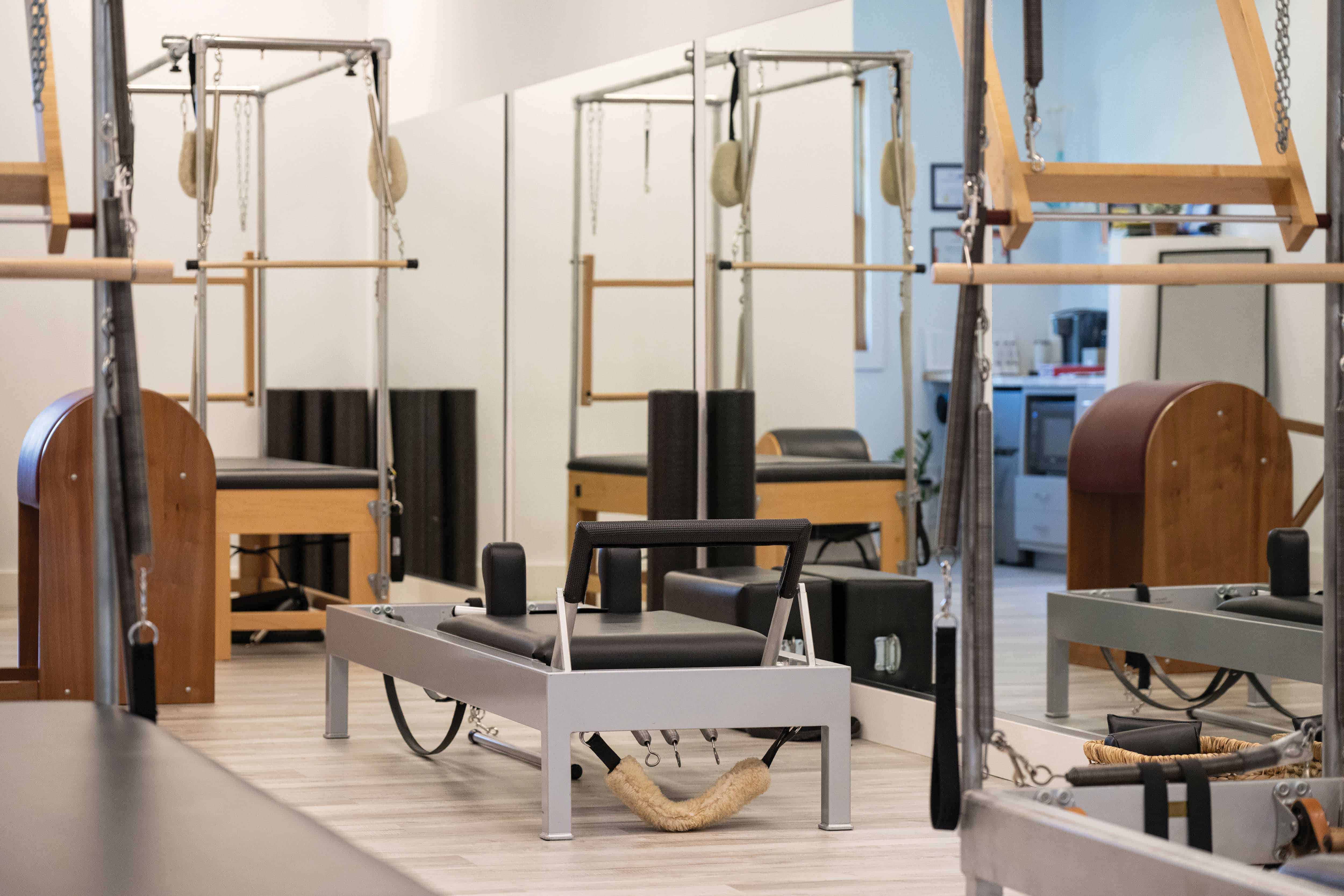
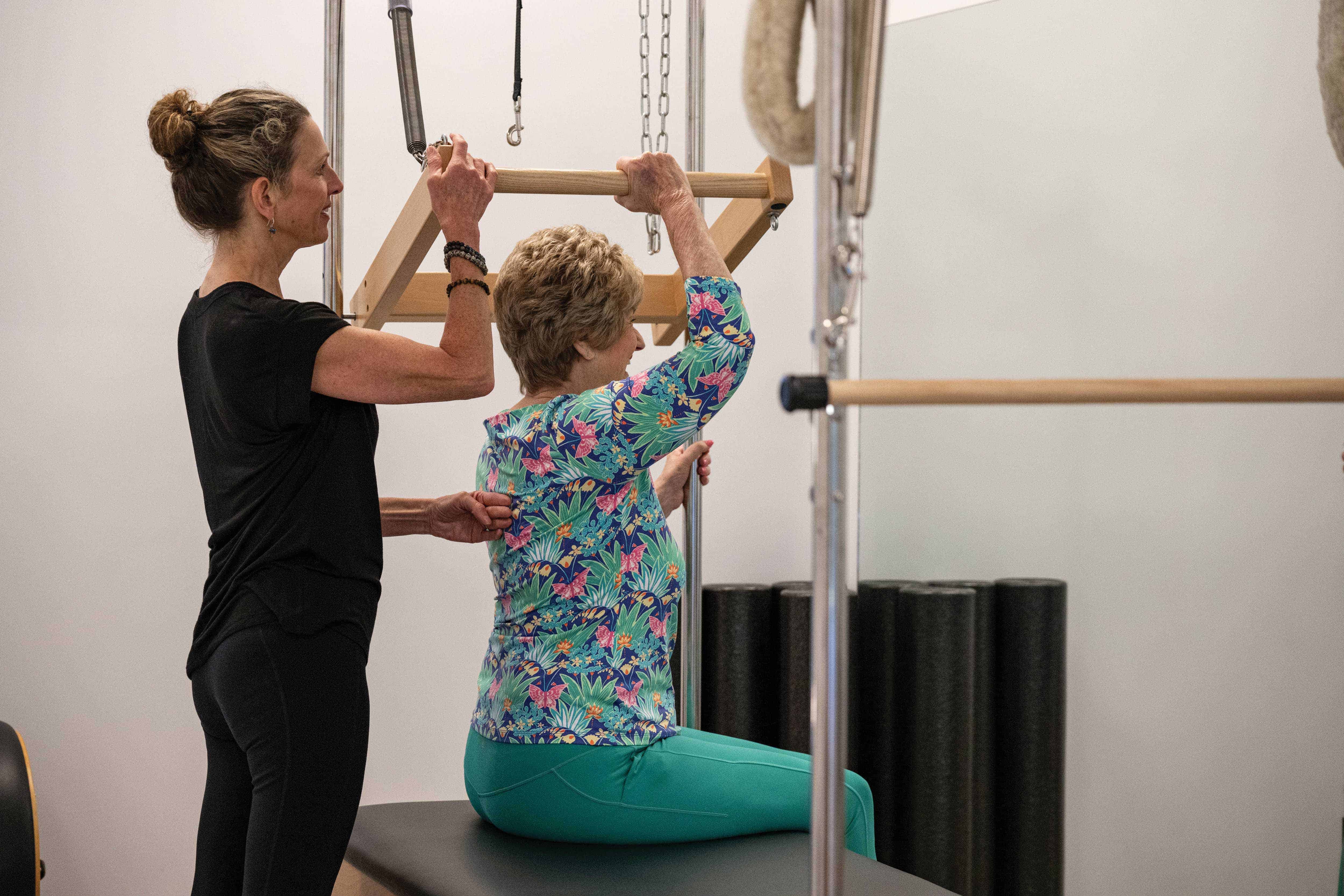
AW: Because apparatus work requires hands-on instruction, we offer private and duet sessions for those interested in working on the reformer, Cadillac, tower unit, and barrel. Our Mat Pilates class accommodates six clients because of its flexibility. Clients move at their own pace while I cue them on modifications throughout the workout.
NCL: What advice would you give someone just starting out with Pilates?
AW: Be consistent, persistent, and give yourself some grace. Each session is different; therefore, do your best that day. Over time you will see the growth.
NCL: How do you ensure a safe environment for your clients during their Pilates practice?
AW: Providing a safe environment is non-negotiable for any training session. As a classically trained instructor, every client who walks through the door should feel comfortable to test their limits with the belief that we know how far to push them. Clients should feel empowered to openly communicate with me throughout the session about their current physical and mental limits.
NCL: How do you manage clients who have physical limitations or injuries?
AW: Keeping an open dialogue with each client is critical. We need to know their current limitations and concerns to provide the best possible instruction. That knowledge allows me to observe and make adjustments where necessary, allowing them to gain confidence through each progression. Because many of our clients deal with osteoporosis, I elected to take specific workshops to better educate myself on the condition and best practices in Pilates. This allows me to guide them through exercises best suited to their condition. At the end of the day, we all have our strengths and weaknesses. Just showing up is half the battle.
NCL: How do you measure progress or success in your students?
AW: Body alignment is the first area I focus on with a Pilates newbie. We want to open their awareness of their body being held at center. This is honed over sessions to correct misalignment and strengthen the correct muscles to perform an activity. “Mind over muscle” is a key concept in Pilates. Once that concept is mastered, your journey has just begun because there is always another skill you can master, stretching from the primary to the secondary powerhouse.
NCL: Can you share an inspiring story where Pilates significantly impacted a client’s life?
AW: It’s difficult to single one out because I have had the honor of witnessing so many inspirational transformations. One of my clients, new to Pilates, has struggled to find a fitness regimen that works well with her autoimmune disease. After working with her twice a week, she has felt mentally and physically stronger, providing a noticeable boost in confidence. The pride in herself is such a rewarding experience to witness and a testament to the Pilates concept.
NCL: How do you approach designing a new Pilates class or program?
AW: The practice of Pilates is a regimented set of exercises and classical sequences, so there is no need to design a “new” program. Joseph Pilates’ brilliance was in understanding the human body and creating a system, both mat and apparatus, that connects each progression. Rather than a new progression, I work with clients to adjust their form tailored to their fitness level and conditions.
NCL: How do you incorporate mindfulness or mental well-being into your Pilates classes?
AW: Pilates is built on six principles: control, precision, centering, concentration, breath, and flow. These work together to promote the “holy trinity;” mind, body, and spirit.
NCL: What are some common misconceptions about Pilates that you would like to correct?
AW: Flexibility. Rather than it being a pre-requisite to practicing Pilates, it is in fact the benefit of Pilates. Another common misconception is Pilates is a woman’s workout. An ironic belief as Joseph Pilates clients were primarily men.
NCL: How do you maintain your own physical fitness and well-being?
AW: My morning starts with a ride on my Peloton and light weights before heading to the studio. Because we are, thankfully, busy at work, I go through a few Pilates exercises first thing in the morning or between clients. After work, I walk our English Cream Golden Retriever, Teddy, 3 or 4 miles. Sitting still has always been a challenge for me!
Start your Pilates journey today! Book your first session at pilatesofcashiers.com and share your favorite moment at Pilates of Cashiers with #NCLPilatesofCashiers.