
Words by Emily Davis
As poet and essayist Gary Snyder once said, “Nature is not a place to visit; it is home.” It is no wonder so many visitors to the Highlands-Cashiers Plateau report that their vacations feel like returning home — so much so that many feel inspired to stay.
Drawn to the Blue Ridge Mountains by breathtaking scenery and a deep affinity for nature, area homeowners often wish to expand their living space into the great outdoors. In the mountains, many of life’s best moments are lived on trails, at the edges of cliffs, or even just in one’s own backyard, with a soundtrack of a trickling stream or roaring waterfall playing in the background. Fortunately, local and regional landscape designers are just as inspired by these settings, viewing them as a promising canvas to create a masterpiece.
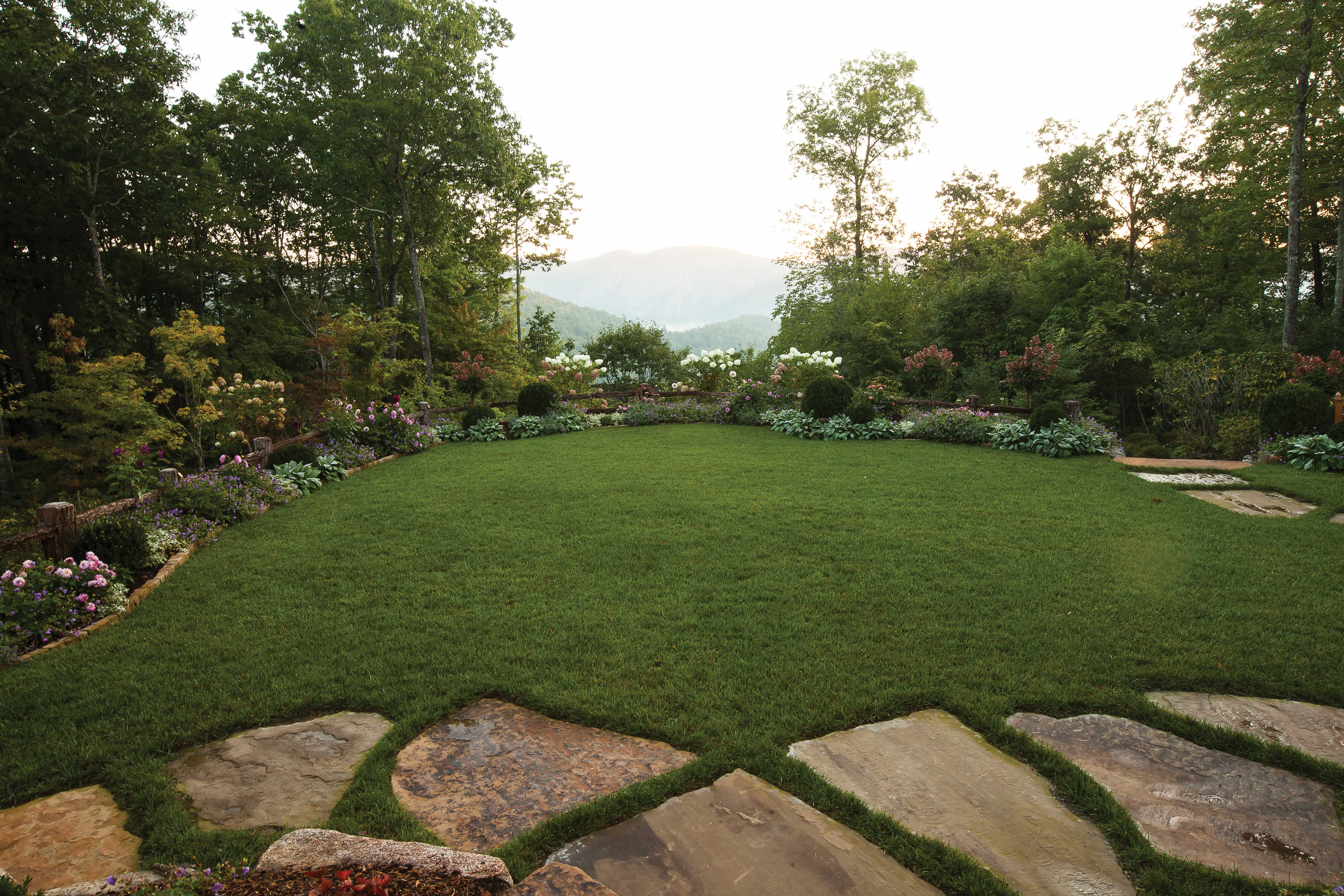 Lush landscaping frames the view of this Cedar Hill estate. Designed by Dargan Landscape Architects. Photo by Sarah M Valentine, courtesy of Dargan Landscape Architects. Dargan.com
Cashiers-area landscape architect Mary Palmer Dargan is intimately familiar with the desire for innovative outdoor living spaces. Following a personal mantra of “Form follows function, then beautify,” she works to develop spaces according to the homeowner’s vision for its use and then complements the space’s natural beauty with thoughtfully chosen accents. She says that terraces are popular because they can fulfill a number of purposes while allowing homeowners and guests to soak in the sights and sounds supplied by the surroundings.
Speaking with a passion for effortlessly integrating functional elements into a natural space, Dargan elaborates. “Clients want to invest in creating outdoor space for multi-purpose use. I like to follow the terrain when positioning these outdoor terraces to take in a beautiful view or an atmospheric rock outcropping.” Location is of paramount importance when choosing a home, and this strategy takes maximum advantage of the natural beauty supplied by a site.
Out-of-the-box thinking can help homeowners quickly pivot to use their outdoor spaces in a multitude of ways. Dargan recommends folding tables and chairs, tablecloths, and zippered storage that can be stashed out of sight. That way, multi-use spaces can be configured for the occasion and circumstances, allowing for more enduring designs that stand the test of time.
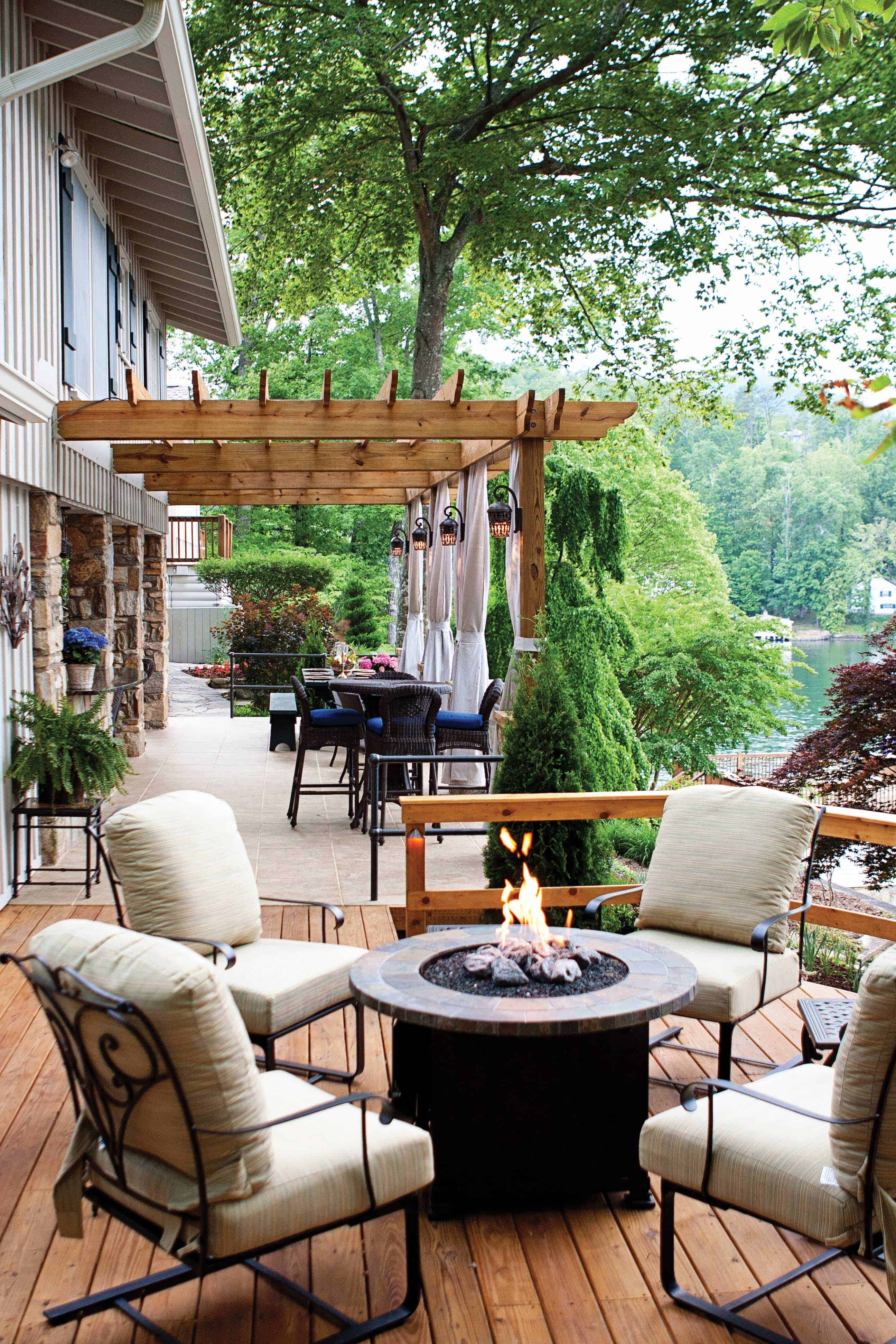 A Lake Lure, NC Oasis designed by Knight Strategies. Photo courtesy of Knight Strategies. Knightstrategies.org
Asheville-based landscape architect Vic Knight has witnessed the same uptick of interest in usable outdoor spaces. “What clients prioritize right now is immersion in nature. They want to enjoy a great view, listen to the soothing sounds of a stream, and create a calm, relaxing place to unwind alone or entertain guests.”
Some of Knight’s clients vacation in spa locations and then seek to replicate that experience at home — which he has accomplished enthusiastically. “My goal is ultimately to create your ideal garden. Your landscape design should provoke an emotional response, and that is always my goal as we create a plan together. How do you want to feel when you step outside?”
Landscape Designer Renee Byrd, based in Cashiers, concurs. “What I love about Cashiers and Highlands is that each property is unique. I create a plan based on the land, considering the homeowner’s desires for utilizing it. We talk about what they want to accomplish with the space. More and more are asking to integrate their living spaces with the outdoors. That can be living areas, dining areas, or even a space used as an outdoor office.”
With any outdoor space, particularly one used for entertaining, lighting becomes an essential consideration. Dargan describes Cashiers as a “dark skies village” due to the rural location and lack of widespread lighting seen in larger municipalities. That description elaborates on what residents love about Cashiers rather than describing a deterrent. With area homeowners preferring a more natural ambiance, Dargan focuses on providing pierced-work lanterns or small deck lights set into posts to provide muted lighting and safer walkways at night.
Nothing lights up the night more than a roaring fire, and fire features have surged in popularity in recent years. Both Knight and Byrd report an increased interest in fire pits, fire bowls, and outdoor fireplaces. With temperatures on the Plateau running cooler than surrounding areas, the added warmth and ambiance are appreciated in the cool seasons and even on some summer evenings.
Knight even incorporates fire bowls into water features, which he says comprise about fifty percent of his work at the moment. “Everyone is interested in water features such as lap pools, small ponds, recirculated streams, and waterfalls because a body of water provides a certain atmosphere. We’re positioning infinity edge pools to take maximum advantage of mountain views, and we can flank either side with a fire bowl to illuminate the scene at night.”
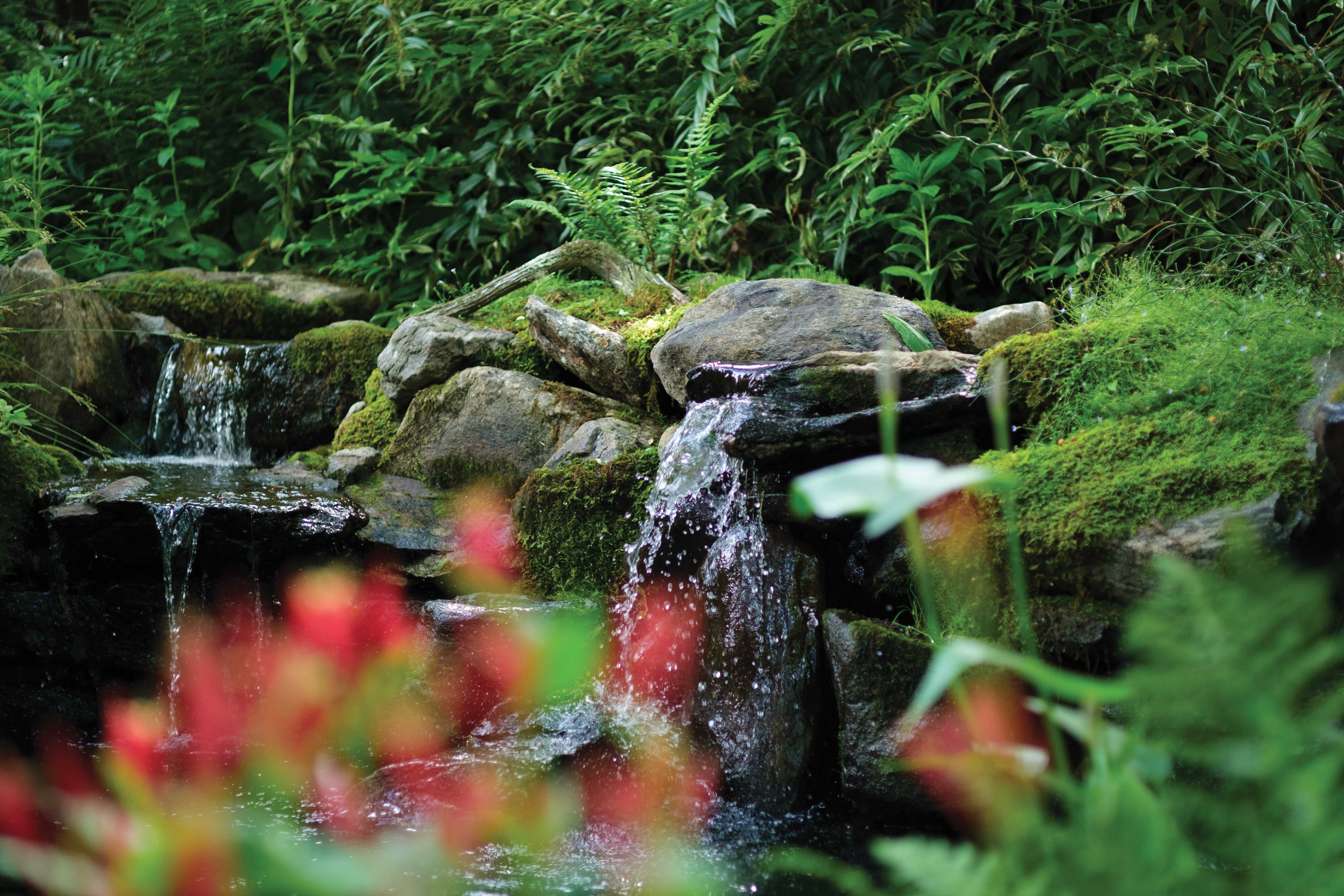
And scenes are the latest thing that everyone wants to create. Homeowners look to establish a vacation or spa atmosphere on their private property, with features such as maintained trails and recirculated streams taking center stage. Many look to create cozy nooks within their landscaping, such as pavilions alongside a pathway overlooking a babbling brook. Illuminated by landscape lighting, with a hot tub on the deck, pavilions tucked away into wooded areas provide a resort feeling in one’s own backyard.
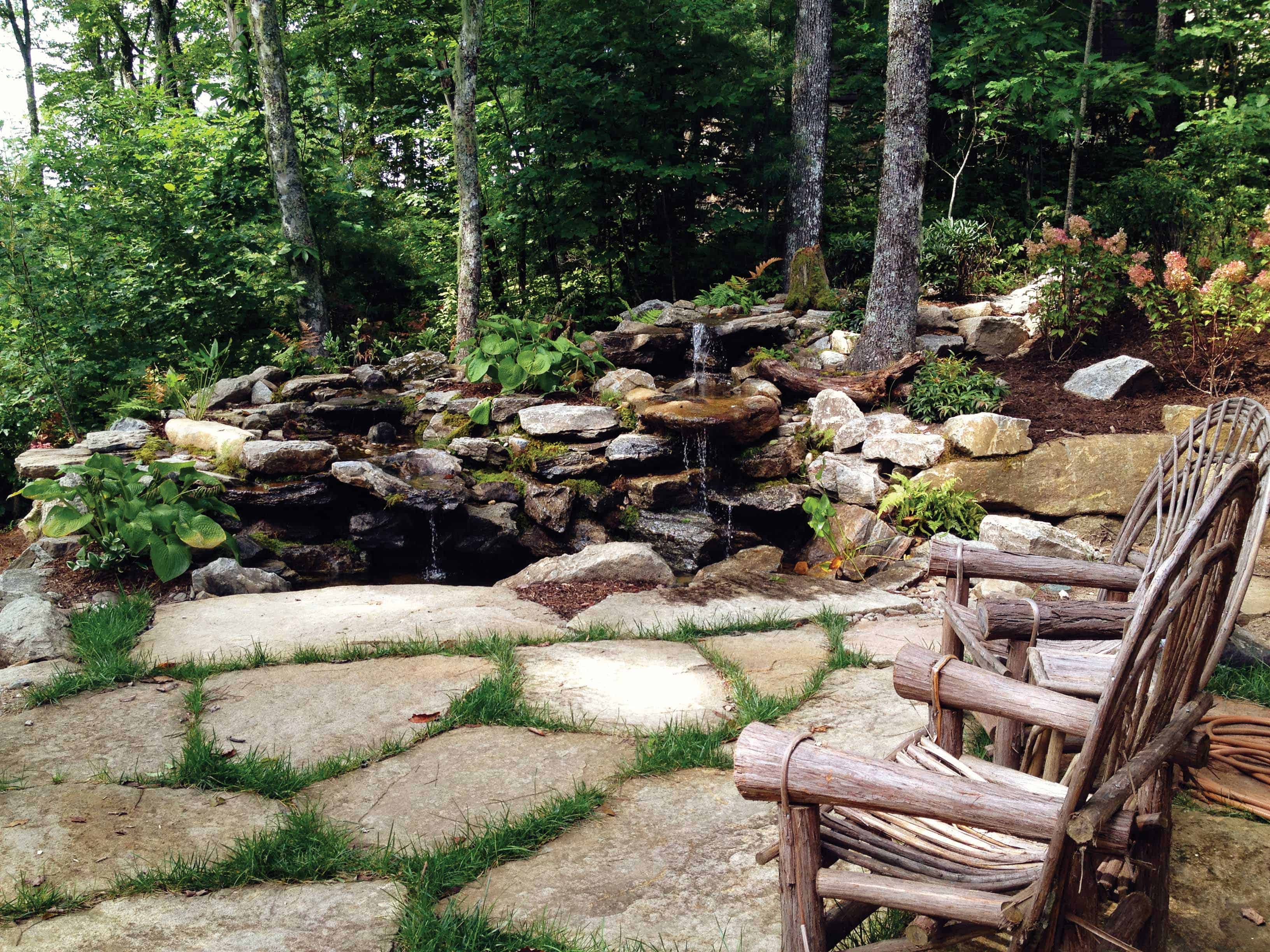 A tranquil setting by Byrd Landscape Design in Mountaintop. Photo courtesy of Byrd Landscape Design. Byrdlandscapedesign.com
“Features like this become a destination on the property,” Knight explains. “Homeowners want a spot to sit and sip their coffee or wine, soak in the view, and enjoy solitude or entertain guests. I use plants and other features like an interior designer would use furniture, fabrics, and art.”
In the wake of pandemic recommendations and concern for public health, home-based entertainment has enjoyed renewed interest in recent years. Rather than large, lavish parties in public locations, homeowners focus on private gatherings in the comfort of their own homes or backyards. During that time, Dargan reflects, “many became accustomed to spending a good amount of time outside in their gardens, or with their family outside doing activities.”
That sense of connection underscores the home gardening movement, with more gardeners realizing the benefits of growing fresh vegetables and herbs within walking distance of the kitchen. “Clients are looking for that sense of connection with nature,” Byrd says. “They walk right outside and gather ingredients for whatever they’re cooking.”
For those with a do-it-yourself mentality, Dargan offers courses on garden design. “In our garden design course, Placemakers Academy, we’ve seen an uptick in enrollment, and people want to know how to treat their home grounds sustainably regarding topics like composting, pollination, harvesting, and utilizing geothermal energy.”
Addressing a common concern about vegetable gardening, Dargan clarifies, “Not everybody wants to or can devote a large amount of time to it, so small six-foot by three-foot containers are very useful and can become a design item that looks pretty all the time.” Flowers can be intermingled with food gardens so that even purposeful beds contribute charm to the landscape.
Knight also utilizes various edible plants in his landscapes when homeowners express an interest. “It can be a bit surprising, in a good way, to see rosemary or creeping thyme incorporated into the design,” he says. “But we include them for the pleasant fragrance and texture, particularly when the client likes the idea of growing food in their garden.”
 Creating moments at Ushuata. Dargan.com
Of course, the unique climate on the Highlands-Cashiers Plateau impacts plant selection. After beginning her career in the Lake Keowee, South Carolina region, Byrd moved to Cashiers and began designing landscapes here approximately ten years ago. “I quickly realized that the temperatures average about ten to fifteen degrees colder up here, and we receive so much rainfall. I rely on native plants that can withstand those conditions or cultivated hybrids that fulfill a specific purpose.”
While native plants are accustomed to the area’s specific weather conditions, plant breeders create cultivars to fit more compactly in certain spaces, to bloom longer, or even to provide flowers of a preferred color. Knight uses a questionnaire to help clients define their hopes and expectations. “We can incorporate favorite colors and textures… Do they love a particular flower because it reminds them of their grandmother’s garden? We tease out that emotional connection to certain plants and then incorporate them into the design.”
Dargan reports that the mountainous terrain and significant rainfall create a need for landscaping that accounts for erosion and drainage. Narrow driveways and parking areas can be redesigned, and large boulder walls can shore up sloping terrain in an attractive and functional way. Mountain dwellers can rest assured that creative solutions are available to solve practical concerns while taking maximum advantage of the natural beauty of their site. “The sky is the limit with generating more and more enlightened landscape architectural designs in my world!”
 The Ushuata Estate designed by Dargan Landscape Architects. Dargan.com
Climate and terrain aren’t the only unique aspects of life on the Plateau. With so many homeowners residing here part-time, the seasonal nature of residency impacts landscape design in surprising ways.
“A lot of my clients are gone for half of the year,” Knight explains. “We carefully select plants that will thrive in their absence, needing little care until they return.”
Byrd takes a similar approach to the design process. “We talk about their favorite colors and flowers, and then we can select flowering plants specifically for their bloom time so that the landscape looks its best while the client is in town to enjoy it.”
Describing her passion for landscape design, Byrd says, “I always wanted to be an artist, and my career allows me to combine art and science while spending time outdoors.” When viewed from this perspective, landscape design takes on an entirely new meaning. Far from a merely practical solution or geographic necessity, a landscape becomes a personally commissioned work of art — the result of collaboration between the homeowner, designer, and nature’s glorious canvas.
Speaking to his relationships with Mary Palmer Dargan, Vic Knight, and Renee Byrd, Silver Creek Real Estate Group Owner and President Jochen Lucke says, “We’ve represented many properties featuring outdoor living areas designed by these talented landscape architects. In some cases, we have been fortunate to watch the gardens evolve and mature over the years.”
NC Living would like to thank our collaborators for this article:
Mary Palmer Dargan
Dargan Landscape Architects
dargan.com | theplacemakersacademy.com
mpdargan@dargan.com
404-354-1715
Vic Knight
Knight Strategies
knightstrategies.org
vic@knightstrategies.org
828-412-0968
Renee Byrd
Byrd Landscape Design
byrdlandscapedesign.com
byrdlandscapedesign@gmail.com
864-508-6928