

Highland Dancer at The Ballater Highland Games. Photo by David Anderson, courtesy of VisitScotland.
In the heart of Western North Carolina, a common thread weaves through local heritage, one that resonates with the vestiges of Scottish ancestry. “I’m part Scottish!” is a declaration worn with pride, a testament to the deep-rooted connection many North Carolinians share with the rugged landscapes and rich traditions of Scotland.
The ties between North Carolina and Scotland stretch far beyond familial lines and cultural exchanges. The Appalachian Mountains form an ancient geological bridge that extends from the heart of the American South, through New England and Canada, to the verdant terrains of the Scottish Highlands and even further, symbolizing a geographical connection that transcends time.
It’s a poetic reflection of history that, millions of years after the continents drifted apart, our Scottish ancestors traversed the Atlantic, settling within the mountain range that echoes their homeland. Often migrating in large, organized groups, they brought a rich history of culture and traditions that left an indelible mark on the region.
The Scottish Struggle for Independence
Throughout recorded history, the spirit of independence has coursed through the veins of Scotland’s people. From the early resistance of the Caledonian tribes against the Roman Empire’s occupation to the medieval clan rivalries and their resistance to persistent encroachments by their southern English neighbors, Scotland’s narrative is one of relentless struggle for autonomy.
The reign of Robert the Bruce from 1306 until his death in 1329 marked a pivotal era. Under his leadership, Scotland emerged victorious in the First War of Scottish Independence, affirming its status as an independent kingdom. This period not only established a period of Scottish sovereignty but also set the stage for the Stewart (later Stuart) dynasty with the ascension of Robert II, Bruce’s grandson, entwining Scotland into the royal lineage of the British Isles for centuries to come.
The Stuart dynasty presided over a historic era that saw the unification of the English and Scottish crowns. However, the deposition of King James II in 1688 amidst escalating religious and political unrest ignited a series of Jacobite uprisings. Fueled by loyalty to the Stuart lineage as the legitimate sovereigns, these uprisings marked a tumultuous chapter in Scottish history. Despite passionate efforts, including those in 1689, the Jacobite cause faced crushing defeats in 1715 and 1719, leaving Scotland without their Stuart king and under English rule by German-born King George I of the House of Hanover.
The Jacobite spirit flared once more in 1745, when Charles Edward Stuart, grandson of King James II, known affectionately as “Bonnie Prince Charlie,” arrived from France to reclaim the British throne. However, this final endeavor culminated in the harrowing Battle of Culloden in 1746, where a decisive English victory quashed the Jacobite rebellion, closing a significant chapter in Scotland’s quest for independence.
The Scots Migration to North Carolina
The Ulster Scots, also known as the Scots-Irish, began migrating to America in the late 1600s, with substantial influxes continuing throughout the 1700s. The first significant Highlander Scots settlement in North Carolina was the Argyll colony, established in 1739. These pioneers settled in Cape Fear, laying the foundations for future Scottish communities in the region, eventually earning the moniker “Valley of the Scots.”
Gabriel Johnston, who served as the Royal Governor of North Carolina from 1734 to 1752, played a crucial role in encouraging migration. A Lowland Scot by birth, Johnston actively promoted resettlement opportunities in America. Through numerous letters sent back to Scotland, he highlighted the allure of the New World — promising land grants, a favorable climate with a lengthy growing season, and the possibility of tax exemptions. His persuasive efforts successfully attracted thousands of Scots, eager for a fresh start.
The aftermath of the Battle of Culloden further accelerated Scottish migration to America. Following their defeat, the English Parliament enacted harsh measures aimed at quelling future rebellions and suppressing Highlander culture. Faced with adversity, these Scottish migrants, sometimes relocating entire communities, embarked on a journey across the Atlantic with hopes of securing economic prosperity and religious freedom. Their arrival and subsequent contributions would leave an indelible mark on the cultural and historical landscape of the New World.
Success in the New World fostered some loyalty to the British crown among Scottish settlers, while others maintained harbored resentment. At the Battle of Moore’s Creek Bridge in February 1776, a regiment of Loyalists, comprised mainly of Scots, charged across the bridge toward Patriot forces. With battle commands issued in Gaelic, this event marked the final broadsword charge by Scottish Highlanders, far from their homeland and the wars of their forefathers. Within minutes, the Scottish Loyalists fell to Patriot cannons and gunfire. The battle represented the first significant Patriot victory in the American Revolution.
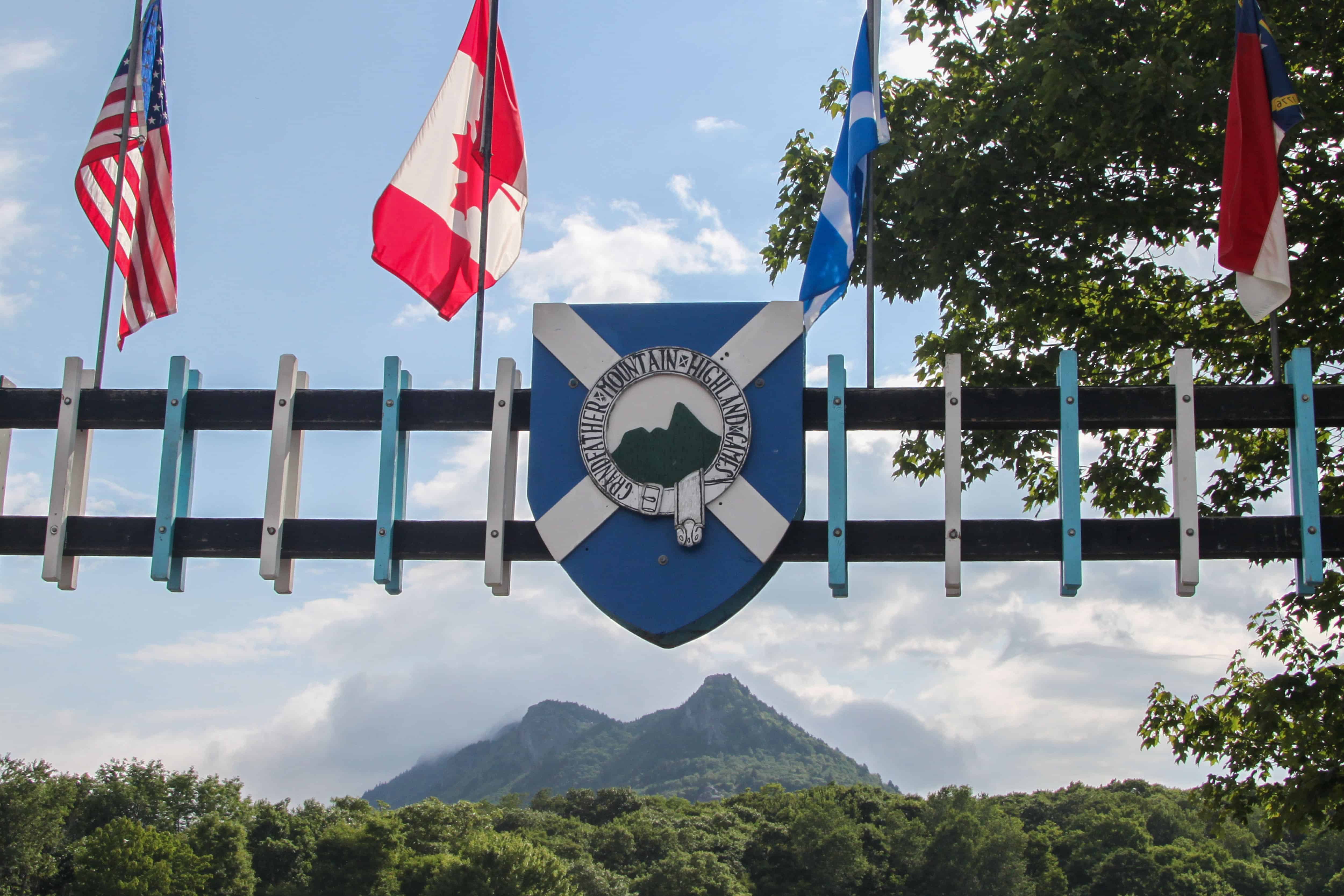
Grandfather Mountain Highland Games entrance. Photo courtesy of GMHG. GMHG.com
Scottish Influence in North Carolina Today
America is a unique blend of cultures, a melting pot where the essence of various heritages melds into a singular American identity. Despite centuries of intermingling, the quest to explore one’s roots and cultural history remains a compelling pursuit for many.
In North Carolina, Scottish surnames are as common as the trees dotting the landscape. Names like Stewart, McCall, and Campbell pepper conversations, standing testament to the Scottish roots entwined with the state’s history. Advances in DNA technology have made tracing these ancestral ties easily accessible, fueling a global resurgence of interest in Scottish culture. This fascination has been further amplified by the portrayal of Scottish heritage in popular media, drawing eyes and hearts towards the wild beauty and rich traditions.
Enthusiasm for Scottish culture led to the establishment of the Grandfather Mountain Highland Games in 1956 by Agnes Morton and Donald McDonald. What started as an intimate clan gathering has blossomed into a spectacular event, attracting over 40,000 attendees to Linville each July. The games have become a cultural bridge, with clan chiefs journeying from Scotland to join Americans in celebrating their shared heritage. Participants don kilts and compete at tossing the caber, perform traditional Highland dances, drink Scottish whisky, and savor haggis, meat pies, and Scotch eggs. Vendors are always on hand to help shoppers determine their clan tartan and get fitted for a kilt.
The success of the Grandfather Mountain Highland Games has inspired similar events across the United States, from Charleston, South Carolina, to Stone Mountain, Georgia. The Taste of Scotland Celtic Festival & Highland Games in Franklin is another highlight, offering a weekend of cultural immersion each June. Attendees can try their hand at traditional Highland sports, purchase Scottish delicacies, watch a sheepherding demonstration, shop for jewelry and other handmade crafts, and dance to Celtic music. And, of course, a pipes and drums band is on hand to provide the distinctive Scottish sound.
The town of Franklin even designed its own Franklin tartan, certified by the International Tartan Index, displayed in the Scottish Tartans Museum and Heritage Center, Inc. Once located in the neighboring town of Highlands, the museum moved to Franklin in the early 1990s. As the only tartan museum in the United States, its exhibits explore a vast range of history, from prehistoric standing stones through tribulations of the Middle Ages and right up to Scottish immigration to North Carolina. Visitors can pick up a Scottish cookbook in the gift shop, purchase authentic wares, or order a custom-made kilt.
Afterward, a drive up to the aptly named town of Highlands is in order. Whilst winding your way through the misty hills of Appalachia to reach an elevation of over 4,000 feet, you might feel as though you’ve reached the other end of the mountain range in Scotland. As you browse the quaint downtown shops, listen for the sound of bagpipes that occasionally drifts through the air, a haunting reminder of the enduring connection between North Carolina and Scotland.
Through festivals, museums, and everyday encounters, the legacy of Scottish heritage continues to enrich the American cultural mosaic, particularly in North Carolina. It’s a testament to the enduring power of ancestry and tradition in shaping our collective identity, bridging past and present in a celebration of shared heritage.